
LORE Q&A: VFX, AI, and the 'Method Acting' of CG Animals

Updated: May 20
Our Q&A series continues as we sit down with Anders, Mattias, and Janak, VFX Supervisors at LORE. Known for building hyper-realistic animals and creatures from the ground up, they have mastered the art of making pixels feel like living, breathing beings. We discuss the "method acting" of CG animals, tactical use of AI, and the crucial on-set data needed to make a digital character feel grounded in a live-action plate. From anatomical truth to the folklore of the north - this is how you build a digital soul!

Henrik: LORE has a reputation for making the impossible look natural. Let’s start with the performance itself: Agencies often write scripts requiring a realistic animal to perform a very specific, almost human action. How do you find the best balance between the need for a directed performance that works within the film's context, and the "truth" of the animal's movements and anatomy?
Anders: We usually tend to start with real life references, trying to find the potential poses and feeling in reality, then pushing that towards the directed performance. It is always a fine balance. Starting off with too much performance usually kills the realism, though sometimes that is actually what is needed. Adding secondary movements helps a lot. Keeping the small twitching and ticks, as well as muscle and hair movement, while keeping the directed performance really adds that needed realism.
Janak: I completely agree with Anders. More often than not the performance is more important than the "truth" of the real animal's actual acting range. With a great looking asset it's easier to sell it all as something real and get that "How the hell did they get that dog to do that!" reaction. Finding that right balance is a combination of scrutinizing references for any specific animal traits, understanding the director's vision and getting into the head of the creature, like all good method actors do.
Henrik: You take pride in building all creature assets from the ground up, including proper muscle systems and weeks spent on grooming and so on. For a producer facing a tight commercial budget, what advances in AI do you see that can make the process and budget more efficient, while still achieving the same true high-end photorealism? Any drawbacks to be aware of when using AI?
Anders: Any part of the process being done by AI lowers the cost significantly, but not completely. The most important part is to be able to control the performance, the camera and the animation. We call this the hybrid approach. The drawbacks with AI behind parts of the visual content created is you lose some of the control. When generating an image or a moving image with AI, it is quite difficult if not impossible to recreate the exact same with a minor adjustment to it. The whole shot will be recreated. You can think of it as being on a shoot and filming an actor. If the first half is good, you can't just redo the second half, you need to shoot again and cross fingers the actor recreates the first part the same as before. Another drawback is the 8-bit image output from AI, which works great as a final image, but not as good for grading.
Mattias: Exactly, and there are many ways we can incorporate AI in our workflows to manage that. We can use it in concept, we can use it to animate certain shots or we can completely forgo the CG pipeline and do the asset fully image based. It depends a little bit on what the clients expectations and their needs are. Our advantage is that we can offer both solutions. For example we can do most shots in AI for a film, but if there are a few hero shots where more control and direction is needed we can offer a "classic" vfx solution for those that gives us full control.
Janak: Adding to what Mattias said, something that AI does really well and efficiently is CXF, simulations of muscles, skin and fur for example, and FX like water interactions, especially when done on top of classical 3d animation. Working like this allows you to have control over performances and then let AI sprinkle its magic on top for that extra level of realism which comes at a pretty high price with the traditional VFX toolbox. AI as a production tool is still an infant to be honest, and as such you need to handle it with care. Whatever you do with AI you need to let go of that pixel and frame fiddling that we’re all so used to simply because you don’t have that kind of top level control. I think this is the single most important thing producers need to understand.
Henrik: Integrating a hyper-realistic CG creature into a live-action plate is a true artform. When you are supervising on set, what is the one common mistake live-action crews make that makes integrating the digital animal much harder in post-production?
Anders: It is always difficult on set to imagine what is not there. To make this easier, we very often use stand ins. It can be an actor, a fluffy toy, a card board cutout or a ball on a stick. Anything to get the job done. Another approach is augmented reality, where we can add a 3d animated version of the creature to the live feed of the camera. Regarding specific common mistakes, it is not understanding the importance of letting the VFX On Set Supervisor spend the few minutes it might take for the tasks to be done. HDRI, lidar and measurements. It will save us days or weeks if we have the data needed.
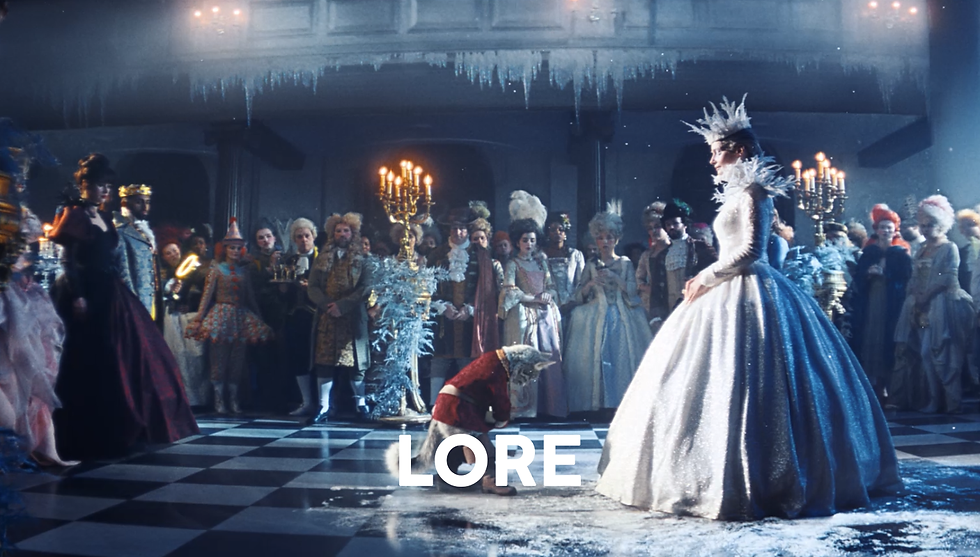
Mattias: That data is crucial because references are always king. It goes for developing our creatures as well as integrating them into a plate. We have a set of techniques to capture data on set that will make the process of shot integration less of a guess, saving lots of time later in post production. It is important that our VFX supervisors are given the time and access to capture that data. It must be said that this is usually not an issue as crews are quite accustomed to vfx work nowadays.
Henrik: CG Animals are notoriously difficult because our brains are hardwired to spot when fur, feathers, or muscles do not move correctly. What is the subtle, often overlooked detail in your workflow that actually tricks the human eye into believing the digital creature is breathing?
Mattias: We think its not one aspect but rather the combination of many. For a creature to be believable all things must come to play. Animation, simulation and lighting. If anyone of these is not up to par the illusion breaks. The key lies in making all of these different disciplines work together seamlessly.
Janak: Yeah, and again I’d say that reference is key, and not only visual references. It’s really important to read up about whatever creature you are creating to understand what makes them tick from the ground up. You then apply this across all disciplines to make sure all of that comes out in the final pixels on screen.
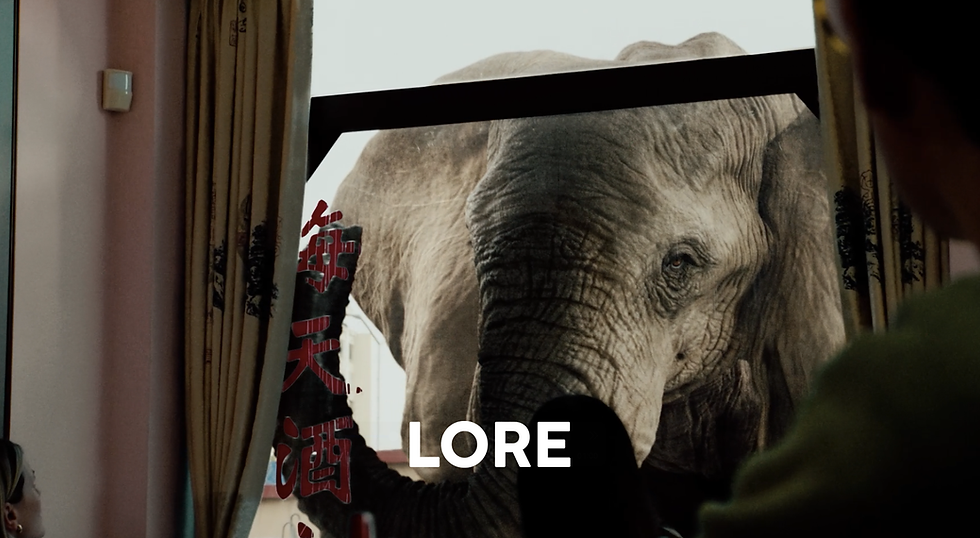
Henrik: With your vast experience and your integration of AI tools in your pipeline, your technical ceiling is higher than ever. With that in mind, and looking at the year ahead, what would be a specific mythical beast, animal, or complex character you are just dying for a client to brief you on?
Janak: As a creature and monster lover there are so many mythical beings out there that haven’t seen the light of day yet, and there’s a ton of those hiding up here in the dark northern woods. Personally, I would love to take a stab at the creatures from the book Stallo, nasty trolls shapeshifting into bears and especially that little mysterious supernatural creature Jirvin. I know there was a feature film script in the works many years ago that probably didn’t make it too far, perhaps due to the budget it would have needed back then. With the advent of AI I can really see local creature projects like this actually happening, hint hint to anyone with the rights out there, let’s have a chat!
Henrik: Thanks for your time! It’s fascinating to hear how much of the 'human' element actually goes into creating a digital animal, and that a bit of cardboard on a stick on set can still be a VFX artist's best friend. And Janak, I’m officially keeping my fingers crossed for that Stallo project. Seeing those shapeshifting trolls brought to life with your level of craft would be something else. Thanks for the chat, guys! Check out more of LORE's creature work here



Comments